





A decision-led framework for choosing the right molecules, indications, and modalities—and knowing what to fund next
Every decision to advance a medicine also represents a decision not to fund something else. Therefore, asset prioritisation must connect the potential benefit for patients with the investment, capacity, and risk required to deliver it.
This means that for pharmaceutical and biotech companies, asset prioritisation is more than a portfolio exercise: it determines which scientific hypotheses and unmet medical needs the organisation is willing to fund—and which opportunities remain unexplored. Making these choices requires connecting biological promise with a credible path to clinical benefit, manufacturing, access, and use.
Asset prioritisation requires building an evidence-led portfolio for each molecule—including disease mechanism, patient population, regulatory landscape, treatment setting, and alternatives against which it will compete—with a credible path to meaningful patient benefits and a ROI that supports continued innovation. Scientific promise, safety, patient value, and financial viability are all aspects of the same investment decision while still being distinct considerations.
Before comparing opportunities, teams should use patient input to define an initial target product profile: who the medicine is for, the benefit it must deliver, the safety and treatment burden patients could reasonably accept, and how it should differ from the expected standard of care at launch. Further input from key opinion leaders, prescribing clinicians, and research sites can help teams assess whether the proposed benefit can be measured in a feasible trial and delivered in clinical practice. Together, such external engagements shift the discussion from “how promising is our molecule?” to “for which patients and in which treatment setting, could this medicine improve care—and what evidence would justify investing further?”
How to assess whether a molecule merits further development.
The 5-dimensional framework (5Rs) provides a strong foundation to assess the benefits of further development based on the right target, right tissue, right safety, right patient, and right commercial potential (see figure 1)¹.
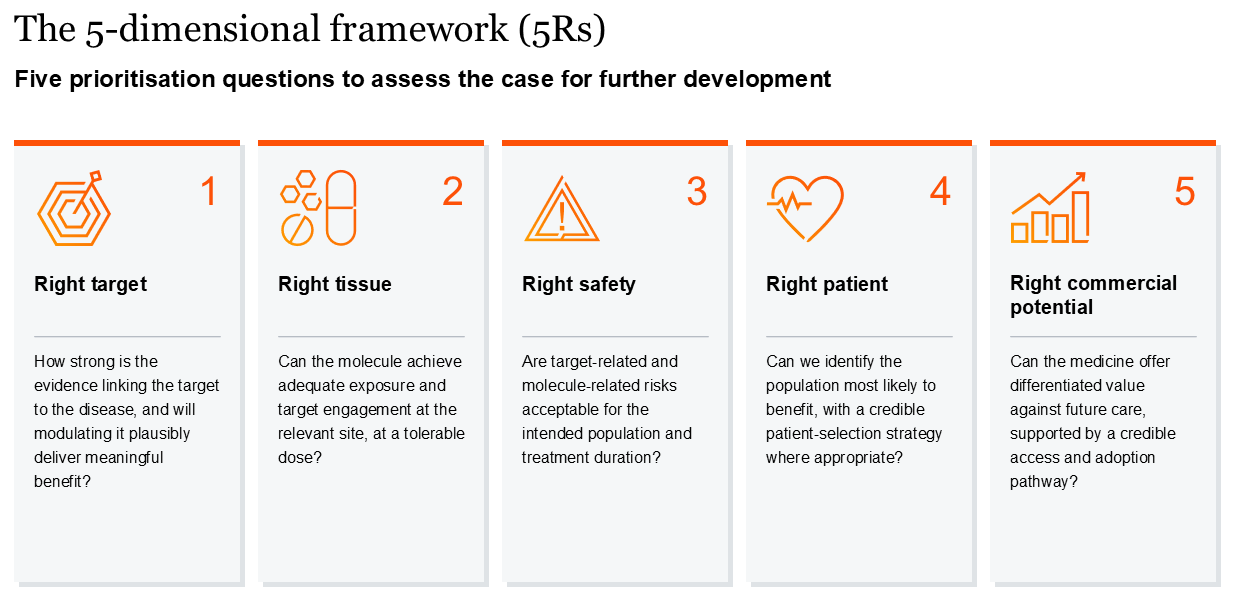
Figure 1: the 5 dimensional framework (5Rs)²
Portfolio prioritisation takes this further by asking an additional question:
Even if this opportunity is worth pursuing, is it the best use of our next unit of capital, capacity, and leadership attention?
Several programmes can meet reasonable scientific criteria while competing for the same clinical teams, manufacturing capacity, or investment. Conversely, a highly uncertain opportunity may deserve a small, targeted investment because one experiment could materially change its prospects. Turning these trade-offs into investment decisions requires defining the alternatives, assessing the evidence, establishing accountability, and funding the next decision-changing evidence.
- Define the decision and the alternatives
- Build a common evidence profile with explicit uncertainty
- Establish decision ownership and reassessment
- Fund the next decision-changing evidence
Define the decision and the alternatives
Clear definitions of the decision and its alternatives provide the starting point for portfolio prioritisation. The choice may involve nominating one candidate over another, selecting a lead indication, or comparing modalities before committing to a development route, funding a proof-of-concept study, or partnering an asset whose development requires capabilities beyond those available internally.
Molecule selection, indication selection, and modality selection are related, but not interchangeable:
Molecule selection compares compound-specific properties, including selectivity, exposure, safety, and developability.
Indication selection compares biological relevance, unmet need, patient identification, trial feasibility, endpoints, and differentiation.
Modality selection compares the ability to achieve the required biological effect with acceptable delivery, durability, reversibility, safety, and production characteristics.
For example, changing modality requires a different series of studies and may also affect the target patient population.
The decision should also make the opportunity cost explicit: which alternatives would be forgone or deferred if this recommendation is funded? This clarifies what is being both prioritised and deprioritised.
Build a common evidence profile with explicit uncertainty
Each opportunity needs a consistent evidence profile that spans the 5Rs and the end-to-end delivery pathway. This includes assessing the molecule’s biology and clinical potential, chemistry, manufacturing, and controls (CMC), supply feasibility, regulatory and payer evidence requirements, diagnostic availability, organisational capabilities, and remaining investment.
It’s important to keep three things separate: what the evidence suggests, how confident you are, and what remains unknown. This distinction is especially important in rare diseases, where natural-history data and patient cohorts may be limited.
Evidence expectations can evolve with the asset’s development stage. For a discovery asset, the focus is on a plausible patient-value hypothesis and a plan to test its key assumptions, with more detailed access forecasts developed as the programme progresses.
Modality-specific evidence also matters. Use explicit, stage-appropriate minimum requirements before comparing relative attractiveness. An unmanageable safety liability shouldn't be outweighed by a high commercial score. An unresolved delivery question may justify conditional investment rather than immediate termination—if there's a credible way to resolve it.
For opportunities that remain viable, compare patient benefit, scientific confidence, differentiation, time, cost, and strategic fit using transparent criteria. Test whether rankings change when assumptions or weights change.
Portfolio risk also extends beyond individual programmes. Multiple indications built around the same asset share molecule-level safety, exposure, and manufacturing risks. Programmes using the same mechanism, delivery technology, or manufacturing platform may also be exposed to a common failure. Teams should distinguish these shared dependencies from indication-specific uncertainties and identify which evidence could reduce risk across programmes. Selecting the highest-ranked opportunities independently can otherwise create the appearance of diversification while concentrating the underlying risk.
Establish decision ownership and reassessment
A framework only matters if it changes funding decisions. Governance must make clear who makes decisions, which evidence informs the choice, and when the decision will be revisited.
Reviews should incorporate discovery, translational science, clinical development, CMC, regulatory, medical, market access, and finance perspectives. Structured input from patients, key opinion leaders, prescribing clinicians, and research sites should inform the assessment of meaningful benefits, trial feasibility, and likely use in practice.
Assign a clear decision owner and document the rationale, assumptions, dissenting views, and conditions for reconsideration. Reassess at defined milestones and after material events, including competitor results, new safety findings, manufacturing constraints, or changes in treatment practice.
The available decisions should extend beyond 'go' and 'stop' to include 'learn first', 'change indication', 'pause', and 'partner'. An asset that's unsuitable for one company’s capabilities may remain valuable to patients through another organisation.
Above all, reward truth-seeking. Teams should receive credit for resolving uncertainty and recommending a justified stop—not only for moving programmes forward.
This governance turns an evidence review into an accountable investment decision, with explicit conditions for continuing, changing direction, or reallocating resources.
Fund the next decision-changing evidence
Prioritisation should determine not only which assets receive funding but which uncertainty deserves to be resolved next. For one programme, the decisive question may be human target engagement. For another, it may be biomarker performance, a manufacturable formulation, or whether a clinically meaningful benefit can be measured in a feasible trial. Identify the uncertainty most likely to improve the development decision and change the investment choice.
A value-of-information approach asks whether the expected benefit of better evidence justifies its cost and delay. A focussed experiment may be more valuable than either full development commitment or premature termination, particularly when its findings can inform several programmes that share the same asset or platform. Define the result that would trigger advancement, redesign, or stopping before the evidence arrives.
Where critical uncertainty remains, strengthening the evidence can be a priority in its own right. The right next investment may be a discriminating translational study that clarifies whether—and how—to advance an asset. As disciplined learning informs investment decisions, this is prioritisation.
Where AI helps—and where it doesn’t
AI and advanced analytics can support this framework by connecting literature, human genetics, translational results, clinical evidence, and competitor developments. They can assist compound-level predictions, identify evidence gaps, and explore alternative development scenarios.
Current research points towards applications in candidate selection and clinical-outcome prediction, while also highlighting limitations in data quality, validation, and interpretability² ³.
The practical question isn't whether AI can produce a ranking, but whether its output is fit for the decision being made. Target prioritisation, molecule selection, and trial-outcome prediction are different tasks. Performance in one doesn't establish reliability in another, nor does a predicted trial outcome establish patient value or the best allocation of a portfolio budget.
AI should be used critically: verify the underlying sources, distinguish observed evidence from model-generated inference, and test whether validation matches the disease area, modality, and development stage. Check for data leakage, calibration, missing populations, and performance outside the training domain. Where evidence is sparse or conflicting, uncertainty should remain visible rather than disappear behind a confident score.
Governance should also be proportionate to intended use. An internal analytical tool doesn't automatically carry the same regulatory obligations as a model generating evidence for a submission. Nevertheless, capital-allocation recommendations need traceable sources, documented limitations, and accountable human review.
Overall, AI should make assumptions easier to challenge—not harder to see.
Turn prioritisation into a testable investment decision
Prioritisation should lead to a clear investment decision. Leaders should be able to explain why an opportunity merits funding now, what it displaces, which uncertainty the investment will resolve, and what result would change the decision.
That rationale should also guide how the effectiveness of prioritisation is assessed. In the near term, focus on the quality of learning and action: time to resolve critical uncertainty, adherence to pre-specified criteria, forecast calibration, and whether resources move when evidence changes. Over the longer term, assess whether the portfolio delivers differentiated clinical outcomes as well as reliable manufacturing, access, patient reach, and financial returns. Keep projected benefits separate from demonstrated outcomes, and patient value visible alongside enterprise value.
Taken together, these perspectives connect the rationale for investment with the outcomes it delivers. Prioritisation becomes a continuous discipline: using what has been learned to reassess the opportunity, the remaining uncertainty, and the case for further investment.
The central question isn't “Which molecule looks best today?”.
It's “Which opportunity deserves our next investment—and what must we learn to justify continuing towards patients?”.
At PwC, we can help you turn asset prioritisation into clear, evidence-led investment decisions—connecting patient value, development feasibility, risk, and financial viability. Together, we can establish transparent criteria and decision governance, identify the evidence needed next, and focus resources on the opportunities that merit further investment. If you’re exploring how to make your asset governance more efficient—and how AI can help you navigate complex choices to build a decision-ready framework—get in touch.
¹ Morgan P, Brown DG, Lennard S, et al. Impact of a five-dimensional framework on R&D productivity at AstraZeneca. Nature Reviews Drug Discovery. 2018;17(3):167–181. doi:10.1038/nrd.2017.244.
² McNair D. Artificial Intelligence and Machine Learning for Lead-to-Candidate Decision-Making and Beyond. Annual Review of Pharmacology and Toxicology. 2023;63:77–97. doi:10.1146/annurev-pharmtox-051921-023255.
https://pubmed.ncbi.nlm.nih.gov/35679624/
³ Aliper A, Kudrin R, Polykovskiy D, et al. Prediction of Clinical Trials Outcomes Based on Target Choice and Clinical Trial Design with Multi-Modal Artificial Intelligence. Clinical Pharmacology & Therapeutics. 2023;114(5):972–980. doi:10.1002/cpt.3008
https://pubmed.ncbi.nlm.nih.gov/37483175/
Author
Seble Wondimu
Senior Associate, R&D and Quality, PwC Belgium
Contact us
Sherly Verbauwhede
Senior Manager , Clinical Operations and Portfolio Strategy Expert, PwC Belgium
+32 476 26 40 50
Charlotte Bertrand
Manager, PwC Belgium
Seble Wondimu
Senior Associate, R&D and Quality, PwC Belgium


